
 College Football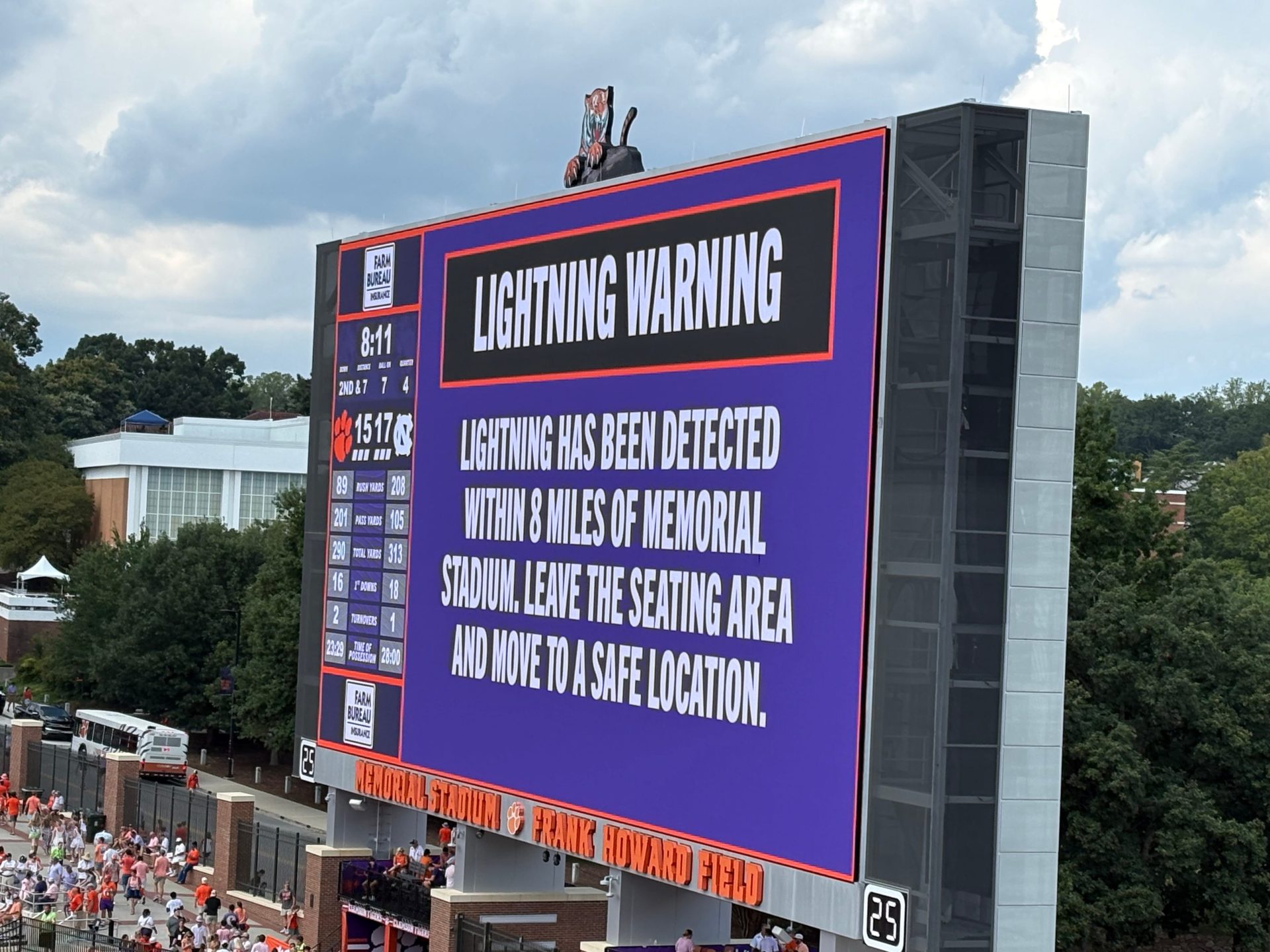
College football spent Saturday fighting the weather almost as much as the opponents lined up across the field. Lightning delays rolled across major matchups, broadcasts got reshuffled on the fly, and ESPN’s production crews were suddenly running the kind of hurry-up offense usually reserved for two-minute drills. Front Office Sports detailed the network scramble as storms disrupted game windows around the country, including a lengthy delay involving North Carolina and Clemson. One storm cell changed the rhythm of an entire national viewing schedule. That is the reality now. Saturdays are no longer just about rankings and rivalry pressure. They are logistical survival tests.
The key detail here is not simply that games were delayed. Weather delays happen every season. The bigger story is how tightly packed the modern college football ecosystem has become. Every kickoff slot matters. Every media window is engineered for maximum attention. Then lightning hits, and suddenly the whole operation bends sideways. ESPN had to juggle live coverage, alternate channels, timing conflicts, and overlapping games while fans bounced between score alerts and weather updates. One delay created a domino effect.
That is not inconvenience. That is leverage.
The sport sells precision. Weather reminds everybody this thing still belongs to nature.
Front Office Sports pointed to the chaos surrounding live coverage decisions, and that pressure matters because television timing now shapes the sport almost as much as the standings do. Networks build Saturdays around clean handoffs from one marquee game to the next. Coaches structure routines around kickoff certainty. Fans plan entire weekends around staggered start times. Then storms arrive and the machine starts improvising in real time. College football loves presenting itself as massive and untouchable. Saturday showed how fragile the flow can get once delays stack up across multiple regions.
The North Carolina-Clemson delay became the visual centerpiece of the afternoon because it captured the strange energy perfectly. Players standing around. Fans waiting. Broadcasters stretching segments while radar maps became part of the viewing experience. Momentum disappeared. Emotion cooled off. Then everybody had to snap back into game mode once play resumed. That changes contests. It changes preparation. It changes recovery. A sport built on rhythm suddenly turns into stop-and-start survival.
And the calendar is only tightening from here.
Conference races do not pause for thunderstorms.
This is where the conversation gets bigger than one messy Saturday. Expanded national attention means more games pushed into premium windows, more travel complications, and more pressure on networks to keep viewers engaged no matter what happens. ESPN became the center of the storm because that is the cost of carrying so much of the sport’s biggest inventory each week. Fans expect instant pivots, seamless updates, and wall-to-wall access even when the weather wipes out scheduling logic. The standard now is perfection under chaos.
Yahoo Sports carried the Front Office Sports reporting wider, and that spread matters because this was one of those weekends where the broadcast operation itself became part of the story. Usually the cameras disappear behind the games. Not this time. Saturday pulled the curtain back on how much coordination it takes to hold together a national college football slate once delays begin stacking up. Producers adjust windows. Talent resets pacing. Control rooms pivot constantly. Nobody watching from the couch sees the full scramble unless something breaks. This weekend flirted with that edge.
There is another layer here, too. Weather interruptions increasingly collide with the sport’s race for maximum exposure. Night games create electric atmospheres and monster ratings, but late kickoffs also create tighter finish windows when storms roll through. One delay can push games deep into the night or force overlap against other major matchups. That creates frustration for fans and pressure for networks trying to preserve audience flow. The balancing act gets tougher every season.
And make no mistake, schools notice all of it. Exposure drives recruiting. Visibility drives revenue. Prime windows matter because college football now operates in a nonstop attention economy where every nationally televised snap carries branding weight. A weather delay does not erase that value, but it absolutely disrupts the delivery system. Momentum matters on the field and off it.
Looking Ahead: Forecasts are becoming part of weekly game prep now, not just background noise. As conference races sharpen and television stakes rise, networks and programs will keep adapting to a season where weather can reroute an entire Saturday in minutes. The games remain king. The clock is no longer guaranteed. If you missed it, you’re behind.