
 Tennis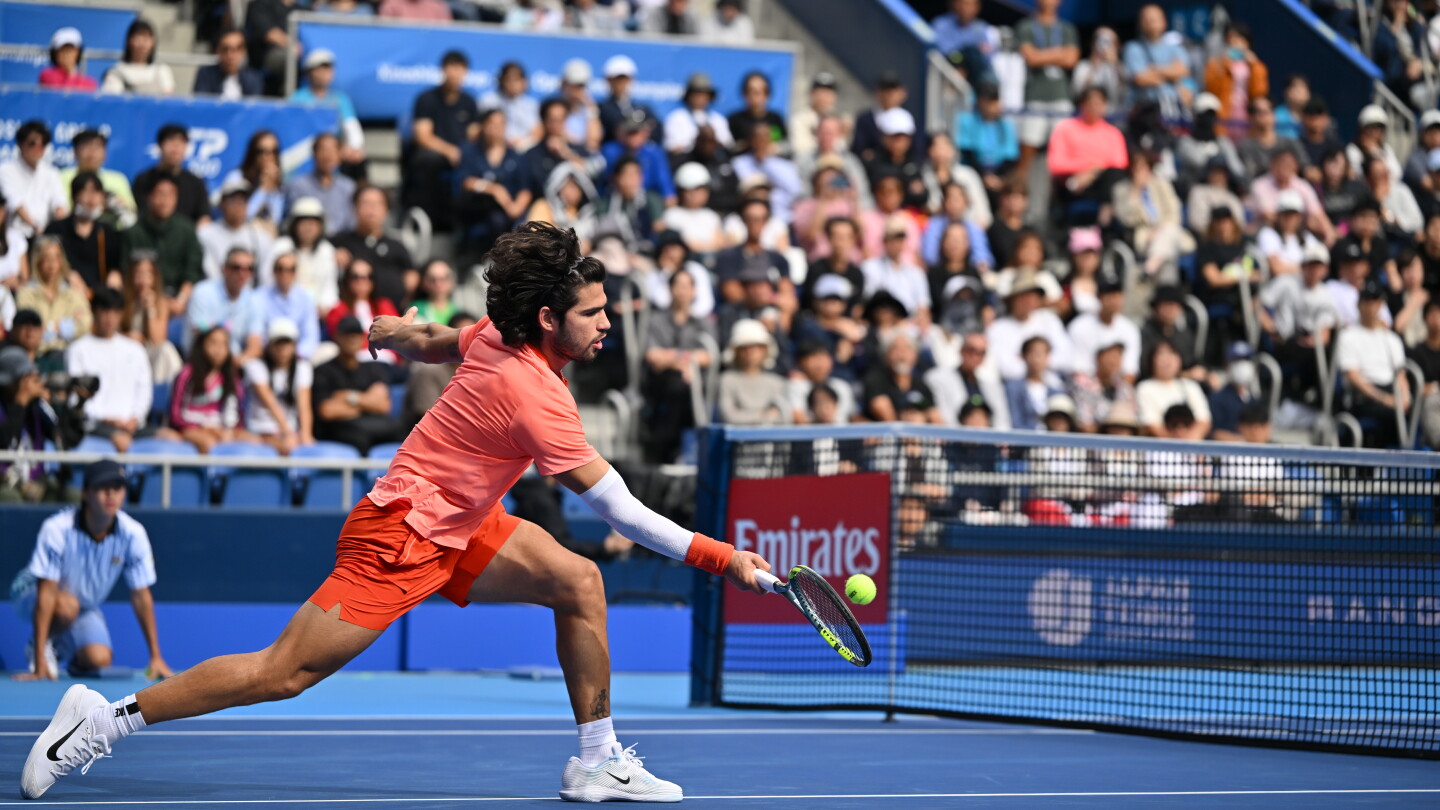
Tokyo gave the tennis world a familiar headline and an uneasy subplot at the same time. Carlos Alcaraz is still marching through draws like a player hunting hardware, but Denis Shapovalov’s injury retirement in the quarterfinals changed the temperature around the Japan Open in a hurry. The top seed advanced to the semifinals, and the result kept Alcaraz planted exactly where the rest of the tour does not want him: deep into another weekend, dictating another tournament, absorbing pressure without giving much back.
The scoreline barely mattered once Shapovalov could not continue. ESPN, NBC Sports, and Fox Sports all tracked the same reality: Alcaraz moved on, Shapovalov walked off, and the tournament suddenly became less about shotmaking than attrition. October tennis always carries that edge. Bodies are cooked. Calendars are crowded. The margins shrink. One awkward movement can flip an entire week.
And still, Alcaraz keeps stacking rounds.
That is the story now.
The rhythm around him feels relentless. Every event becomes another checkpoint in a season where expectations stopped being ordinary months ago. Tokyo was supposed to offer a clean late-season proving ground packed with dangerous floaters and players trying to salvage rankings momentum before the year closes. Instead, the spotlight snapped right back to the Spaniard and his ability to survive whatever shape a match takes. Full sprint baseline exchanges. Tight tiebreaks. Sudden interruptions. He adapts fast, and that adaptability is beginning to feel like his sharpest weapon.
A healthy Shapovalov brings chaos to a draw. Big lefty serve. Flashy pace. The kind of shotmaking that can drag even elite defenders out of structure. That matchup had intrigue because Shapovalov has the firepower to rush rallies and force uncomfortable timing. Instead, the contest ended early after the injury issue forced him out. Details around the injury remain limited, but the timing alone stings. Late-season opportunities are precious, especially in a sport where ranking movement and confidence can swing dramatically over a single tournament week.
The tour does not slow down for anyone. That is the brutal poetry of tennis.
Alcaraz knows it better than most. The physical demand attached to his style is enormous. Every sliding retrieval, every explosive forehand sprint, every full-throttle point taxes the system. Yet he keeps showing up in semifinal brackets while other contenders fight through wear and tear. That is not luck. It is conditioning, scheduling discipline, and a level of competitive urgency that separates stars from players merely hanging around the top tier.
Tokyo also reinforced a larger truth hovering over the men’s game right now: opponents are entering matches against Alcaraz carrying almost no emotional runway. If he grabs momentum early, rallies start feeling shorter than they really are. Players press. They go bigger. Errors arrive faster. The court suddenly looks tiny. That pressure does not always appear in statistics, but everyone watching can feel it.
One week turns into another. Another semifinal appears. The standard keeps climbing.
Fox Sports highlighted the straightforward fact that the top seed advanced. Simple headline. Bigger implication. Alcaraz is treating deep runs like routine business now, and that changes the energy of every tournament he enters. Players are no longer chasing a breakthrough against a rising phenom. They are trying to disrupt a fully established force who expects to own the biggest stages.
NBC Sports framed the injury exit as the central development, and it deserves attention because the back half of the tennis calendar becomes a war of durability as much as talent. Fans love the aesthetics of the sport — the clean winners, the impossible gets, the heavy topspin forehands curling into corners — but October tennis often belongs to whoever can physically hold together through another airport, another practice block, another three-set grind.
Alcaraz is still standing tall in that storm.
That should concern the rest of the field.
Looking Ahead: Tokyo now shifts toward the semifinal stage with Alcaraz carrying the weight and momentum of the draw. The deeper he goes, the more the tournament starts revolving around one question: who can keep him from owning another late-season title run? Right now, nobody has supplied that answer consistently. If you missed it, you’re behind.