
 NFL
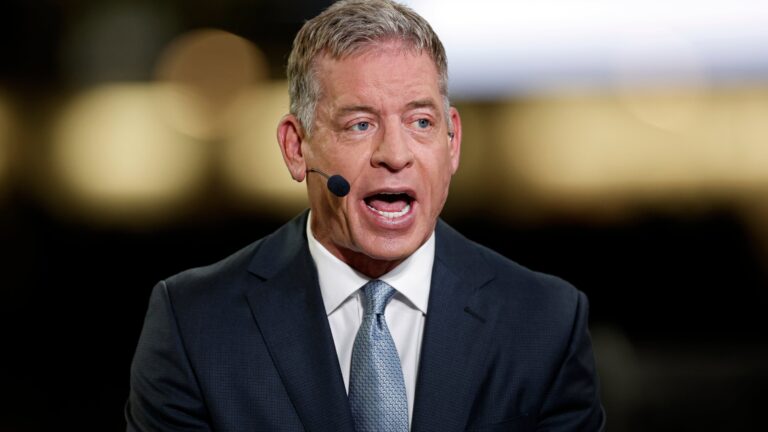
The NFL never really sleeps. Even the broadcast booth can turn into headline territory overnight. This week, the loudest conversation around the league did not come from a sideline blowup, a contract holdout, or a late-game collapse. It came from Troy Aikman — and the growing expectation that his run at ESPN is nearing the finish line.
Boston.com and The Boston Globe both pointed toward the same reality: Aikman has sounded fully aware that ESPN appears ready to move in another direction after the season. No dramatic public fight. No scorched-earth exit tour. Just a Hall of Fame quarterback talking like a man who sees the clock winding down.
That lands differently in football than it would anywhere else.
Aikman’s voice became stitched into modern NFL Sundays and Monday nights. Generations heard massive playoff swings, dynasty runs, and Patriots-era football through that cadence. Calm but sharp. Big-game rhythm without trying too hard to manufacture it. The Globe leaned into the nostalgia angle, revisiting the Patriots Super Bowl years and how closely Aikman’s calls became attached to that stretch of league history. For a lot of fans, those games do not just live as highlights. They live through the soundtrack.
And that is the thing about NFL broadcasting: the booth becomes part of the memory.
Aikman was never the loudest analyst on television. He did not need fireworks every snap. He brought quarterback-room clarity to chaos. Protection breakdowns. Route timing. Why a throw looked easy when it absolutely was not. Fans trusted that voice because it rarely chased the cheap reaction.
Now ESPN may be preparing for a reset anyway.
That is a risky game in NFL media. Chemistry matters. Familiarity matters. The league is built on routine as much as spectacle. Viewers know instantly when a booth feels forced, when the rhythm is off, when analysis turns into performance art instead of football conversation. Aikman avoided that trap for years.
Short version? Replacing him is not just filling airtime.
It is replacing authority.
Boston.com framed the possible departure through the lens of Patriots nostalgia, and that angle hits because the NFL has entered another transition phase. The Brady-Belichick era is long gone. The league’s television package keeps changing hands. Broadcast crews shuffle constantly. Even the presentation of football feels faster and louder now. Aikman represented something steadier in the middle of all that movement.
That steadiness still plays.
The timing also says plenty about where sports media is headed. Networks are chasing bigger personalities, crossover appeal, viral moments, debate clips that ricochet across social feeds before halftime ends. Football analysis increasingly competes with entertainment packaging. Aikman’s style came from a different school. Direct reads. Tactical insight. Quarterback accountability. Less performance. More ball.
**The NFL can replace voices. It cannot easily replace credibility built over decades of Sundays.**
That is why this story carried real weight all week despite having no final announcement attached to it. Fans recognize the difference between a broadcaster who simply calls games and one who becomes part of the sport’s texture. Aikman crossed into that second category years ago.
There is also a strange symmetry to the Patriots connection raised by both outlets. Those dynastic New England games defined an entire television era. Massive stakes. Surgical football. Winter-night tension. Aikman was there narrating many of those moments as the league expanded into a year-round machine. His potential ESPN exit feels tied to the closing of another chapter from that generation of NFL storytelling.
Football moves brutally fast. Legends age out. Coaches recycle. Front offices pivot overnight. Even the soundtrack changes.
The audience notices.
None of this guarantees where Aikman lands next or whether ESPN formally confirms a split after the season. The reporting focused more on expectation and tone than final paperwork. But the conversation already shifted into legacy mode, which usually tells the story before the official press release ever arrives.
And honestly, NFL fans are wired for that kind of emotional recall. A single broadcaster can pull viewers back into a specific January night, a specific Super Bowl drive, a specific rivalry game under cold lights. That connection is real currency in this league.
Looking Ahead: ESPN’s future booth decisions will become one of the offseason’s biggest media storylines, especially if Aikman’s departure becomes official. The network is not just replacing a broadcaster. It is stepping into one of the most recognizable audio spaces in football.
If you missed it, you’re behind.